The Real Cost of Workplace Injuries in Australia (2026 Update)
What a workplace injury costs in Australia: Safe Work Australia's latest claim figures, direct and hidden costs, a worked example and where prevention pays.

Dale Turner
Director
Updated
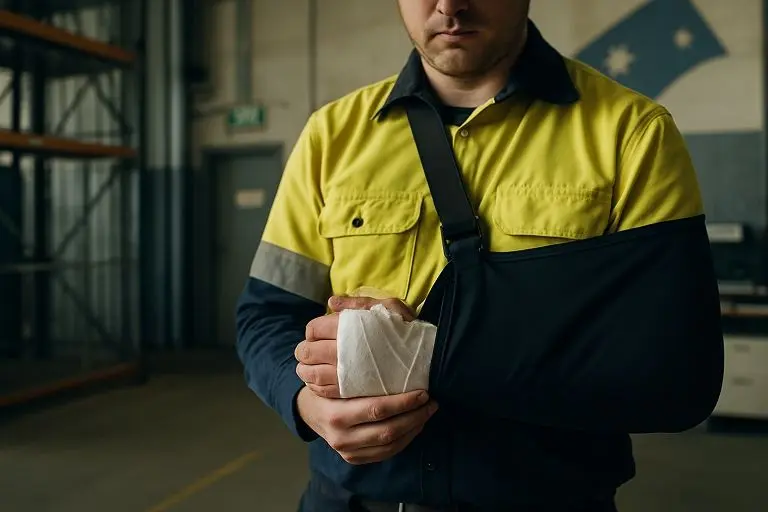
Australian workers made 146,700 serious Workers' Compensation claims in 2023–24, each with at least a week off work. That's more than 400 a day. The claim itself is only part of what an injury costs your business, and usually the smaller part.
This guide sets out what a workplace injury costs in Australia using Safe Work Australia's latest figures, works through the cost of a typical claim, and shows where prevention makes the biggest difference.
What a serious claim costs
Safe Work Australia's Key Work Health and Safety Statistics Australia 2025 gives the national picture. Medians are for 2022–23, the latest year with finalised claims.
| Claims | Share | Median compensation | Median weeks off |
|---|---|---|---|
| All serious claims | 100% | $16,300 | 7.4 |
| Body stressing | 34.5% | $19,400 | 9.2 |
| Mental health | 12.0% | $67,400 | 35.7 |
For employers, the figures show where the money goes:
- Long claims drive the bill. Claims with more than 13 weeks off work were 21.9% of all claims in 2022–23 but 74.8% of compensation paid, about $5.4 billion.
- Body stressing is the biggest single cause. Lifting, carrying and repetitive movement cause 50,600 serious claims a year, the most in every major occupation group.
- Psychological claims are rising fast. Serious claims for mental health conditions rose 161% in the 10 years to 2023–24, and each one costs about four times the median claim.
Direct costs
Direct costs are the ones paid on the claim. They're the easiest to see because they arrive with a claim number attached:
- weekly compensation for lost wages
- medical and hospital costs, treatment and medication
- rehabilitation and psychological support
- higher Workers' Compensation premiums in the years after a run of claims.
Indirect costs
Indirect costs don't arrive with a claim number, so they're often missed. They include:
- overtime, agency staff or lost output while the injured worker is off
- time spent by supervisors, HR and safety staff on reporting, investigation and return-to-work planning
- recruiting and training a replacement, and the experience lost when a skilled worker leaves
- lower output while the worker returns on suitable duties
- legal costs and penalties if a regulator finds a breach of work health and safety (WHS) duties.
A worked example
Take a warehouse worker who hurts their back lifting cartons and makes a typical serious claim. Using the national medians, a $2,000 weekly wage cost, cover for a quarter of the time lost, and 20 hours of admin at $70 an hour:
| Cost | How it's worked out | Amount |
|---|---|---|
| Claim | Median compensation for all serious claims | $16,300 |
| Replacement labour | 7.4 weeks × $2,000 × 25% | $3,700 |
| Admin | 20 hours × $70 | $1,400 |
| Total | $21,400 |
Five claims like that cost about $107,000 a year, before any premium increase. A body stressing claim at its own median ($19,400 and 9.2 weeks) comes to about $25,400. One mental health claim at the median costs more than $85,000 on these assumptions.
This leaves out recruitment, lost output and the effect on the rest of the team, so the real figure is usually higher. Put in your own numbers with our free workplace injury cost calculator.
How prevention changes the numbers
Because most of the cost sits in a minority of long claims, the best returns come from stopping strains and sprains from becoming claims, and from shortening the claims that do happen. That means:
- finding and redesigning the tasks behind your claims, starting with the heaviest and most repetitive lifts
- treating strains on the day they start, before they need time off
- bringing injured workers back on suitable duties sooner
- managing psychosocial risk, the risks to mental health from how work is designed and managed, before it becomes a claim.
Our workplace injury prevention programs do this on your site, on your shifts. Clients typically cut Workers' Compensation claims and premium costs by 35%, and most see a 4:1 return in the first year. Early intervention and wearable technology add to the saving where strains are the main cost.
To see whether prevention is working, track your lost time injury frequency rate over time. Our free LTIFR calculator works it out per million hours worked and compares two periods side by side.
Case study: StarTrack
StarTrack's freight volumes grew 25% while injuries from manual handling were rising. Over three years, an onsite injury prevention program at its Queensland and NSW depots cut injuries by 36% and medically treated injuries by 43%. StarTrack saved more than $2.5M in direct costs and premiums, a conservative 3.5:1 return.
Read the StarTrack case study to see how the program worked.