EMP Onsite

Job Dictionary Development

Defining job demands with precision.

EMP Onsite's Job Dictionary Development service provides a comprehensive, evidence-based catalogue of the physical, cognitive, and environmental demands of every role within your organisation.

Using structured onsite assessment, motion analysis, and clinician-led evaluation, each job role is broken down into measurable components that define what safe, capable performance looks like. The resulting job dictionaries become the foundation for safer recruitment, targeted training, effective injury prevention, and efficient return-to-work planning.

All job dictionaries are housed within the EMP Risk Portal, ensuring secure digital access, version control, and easy integration with functional assessments, pre-employment screening, and task risk profiling.
Key Benefits

Evidence-based job dictionaries provide the foundation for safer, more effective workforce management.

  • Consistent objective baseline

    Provides a consistent, objective baseline for assessing role demands across all positions and locations.

  • Stronger recruitment decisions

    Strengthens recruitment, onboarding, and redeployment decisions through clear understanding of role requirements.

  • Reduced worker-job mismatch

    Reduces mismatch between worker capacity and job requirements, preventing injuries and performance issues.

  • Targeted injury prevention

    Enables targeted injury prevention and work design improvements based on documented physical demands.

  • WHS compliance support

    Supports compliance with WHS and anti-discrimination legislation through objective role documentation.

  • Portal integration

    Integrates directly with the EMP Risk Portal for ongoing data use, comparison, and analysis.

Proven Impact

Real-world applications demonstrate the value of comprehensive job documentation.

IndustryResultROI / Outcome
Logistics & Transport120+ roles documented across a national networkImproved recruitment accuracy and RTW efficiency
Retail DistributionRole dictionaries embedded in the EMP Risk Portal for every site and roleFaster, standardised onboarding and screening
Government & UtilitiesFull body of work aligned with WHS Regulation complianceClear, defensible documentation of inherent job demands

Across diverse industries, EMP Onsite’s injury prevention programs have consistently delivered significant reductions in workplace injuries and measurable productivity gains, demonstrating strong return on investment and lasting improvements in safety culture.

Optional Enhancements

Enhance job dictionaries with advanced assessment technologies and integrations.

  • AI-Assisted Task Risk Assessment

    Automatically identifies high-risk movements and postures from recorded job footage, accelerating assessment accuracy.

    AvailableNew
  • Human Performance Technology

    Force and strength testing devices provide quantified load data for validation, ensuring objective measurement.

    Available
  • Functional Assessment Links

    Enables pre-employment and RTW benchmarking directly against job-specific requirements for accurate matching.

    Available
  • Wearable Motion Data

    Real-time movement and posture tracking for high-risk or repetitive tasks provides detailed biomechanical insights.

    Available
  • Task Redesign Consultation

    Ergonomic optimisation recommendations to reduce strain and fatigue, improving both safety and productivity.

    Available

Why Organisations Choose EMP Onsite

Trusted by leading employers for our clinical expertise, measurable results, and seamless integration with existing safety systems.

  • Clinically validated job demand mapping methodology
  • Full integration with the EMP Risk Portal and related services
  • National coverage with industry-specific expertise
  • Evidence-based documentation supporting recruitment and safety
  • Proven ROI through reduced claims and improved workforce matching

See It in Action

How Australian employers have used this service to cut injuries, claims and lost time.

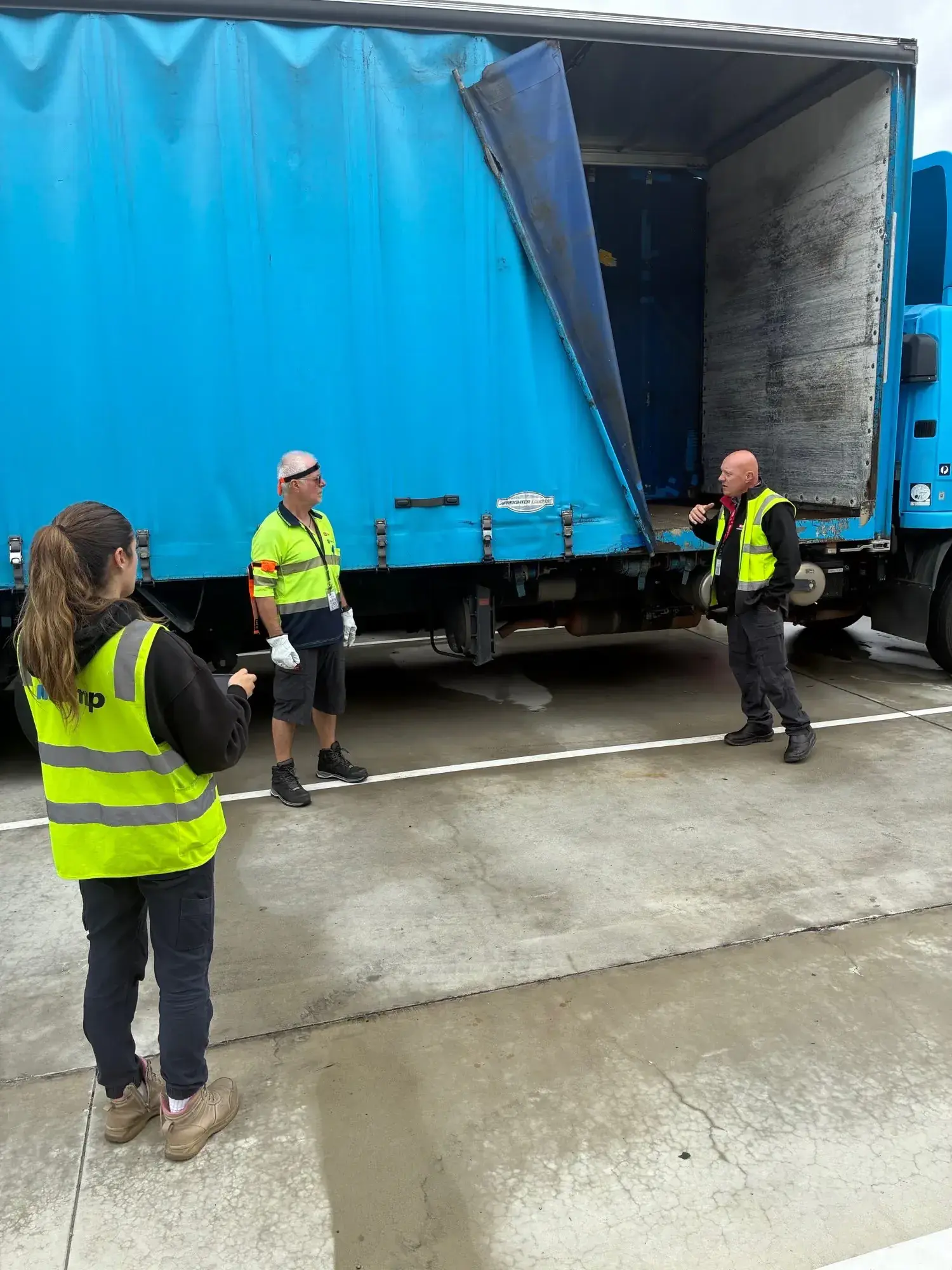
  • Ergonomics practitioner talking with two drivers beside an open curtain-sided truck.

    Embedded onsite clinicians and data-driven workforce insights supported more than 1,000 logistics workers nationally.

    Reduction in strain injuries
    30%+
    Increase in depot throughput
    8–10%
  • Ergonomics practitioner coaching a smiling worker pushing a loaded cage trolley.
    StarTrack

    Combining onsite physiotherapy with structured preventative coaching and data-led analytics to achieve industry-leading safety results.

    Reduction in injuries
    36%
    Return on investment
    3.5:1

No-risk 90-day pilot

Leave with a clear plan to reduce risk, or get your money back.

Ready to Transform Your Workplace Safety?

Start with a no-risk 90-day pilot. We'll tailor a program to your workplace, agree success measures up front, and show you how to reduce risk, lower claims costs, and build a stronger, safer workforce.

Frequently Asked Questions

What is a Job Dictionary?

A Job Dictionary is a structured record describing each role's physical, cognitive, and environmental demands, used to ensure safe hiring, injury prevention, and return-to-work planning.

Who develops EMP's Job Dictionaries?

They are developed by EMP Onsite's allied health professionals under national clinical governance and validated with site representatives.

Can the Job Dictionaries be integrated with our HR or safety systems?

Yes. The digital versions stored in the EMP Risk Portal can be linked to existing HR, recruitment, or WHS management systems for seamless access and version control.

Do you include non-physical (cognitive, emotional, or environmental) demands?

Yes. Each dictionary includes cognitive, sensory, emotional, and environmental factors such as concentration, shift work, noise, temperature, and fatigue exposure where relevant.

How often should Job Dictionaries be reviewed?

We recommend a review every 2–3 years or whenever there are major changes to job design, equipment, or operational processes.

How is the information stored and accessed?

Securely within the EMP Risk Portal, with permissions for HR, HSE, and rehabilitation staff to access approved versions for reference, comparison, and audit purposes.

Related Services

Explore complementary programs from our Work Design & Safety range.