Ports & Stevedoring
Qube Ports: Sensor-Led Injury Prevention on the Wharf
How wearable sensors, targeted coaching and shoulder conditioning cut task risk for Qube Ports stevedores, with a modelled return of $5.50 for every dollar invested.
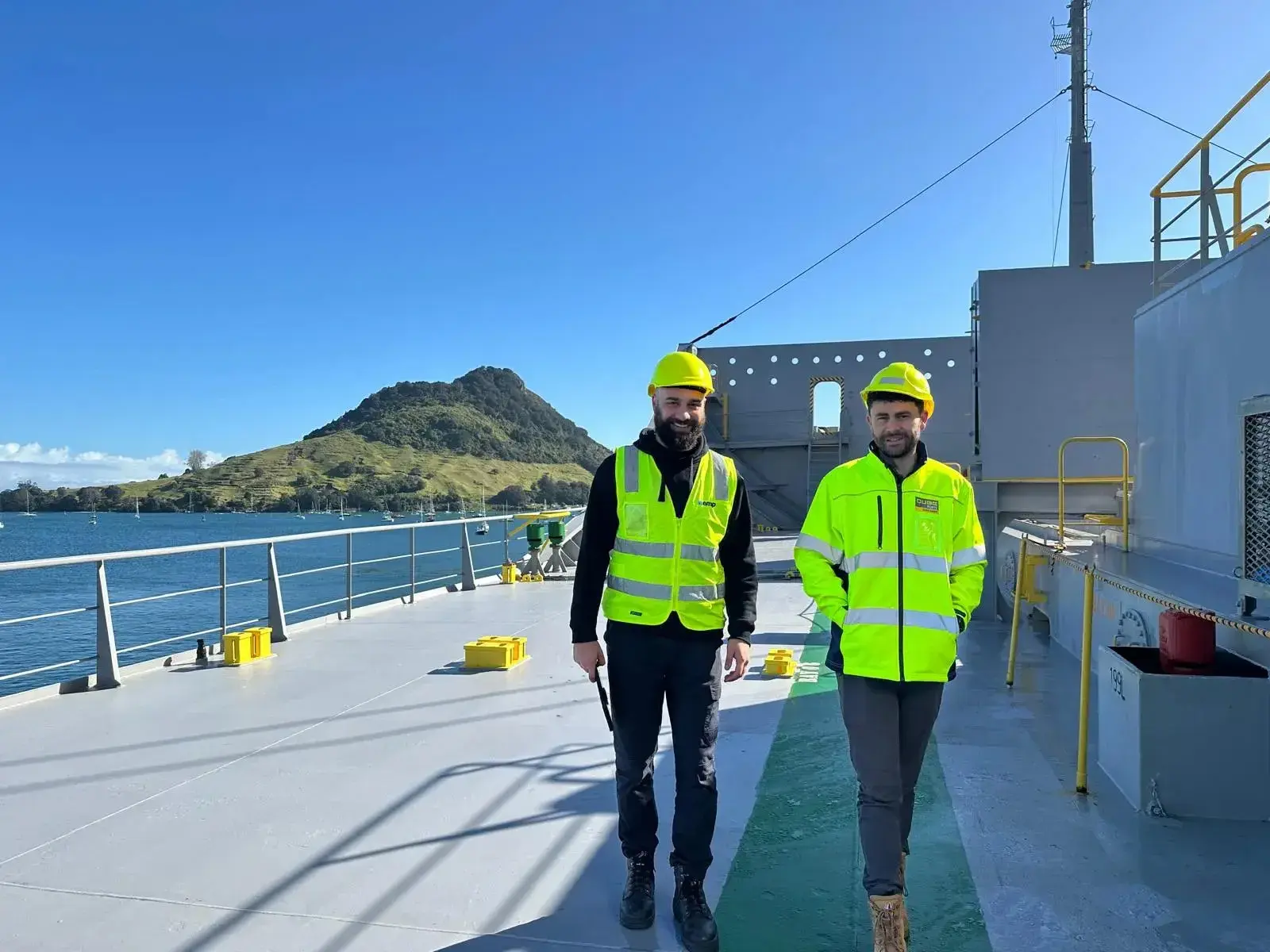
- Client
- Qube Ports
- Sector
- Ports & Stevedoring
- Locations
- Melbourne docks & New Zealand ports
- Program
- Sensor-led injury prevention
Results at a Glance
Measured with wearable sensors and strength testing at Qube's Melbourne docks.
5.5:1
Modelled annual return on investment
80%
Biggest reduction in measured task risk
46%
Average risk reduction from SMART coaching
19.8%
Gain in external shoulder rotation strength
The Challenge
Stevedoring puts heavy, repetitive load through the body in some of the most awkward spaces in industry.
Qube Ports runs port and stevedoring services across Australia and New Zealand, handling containers, vehicles, timber and bulk cargo. Its workers lash and unlash cargo on vessel decks, control slung loads at the wharf and load warehouses, often in tight spaces that force them to bend, kneel and reach overhead.
When EMP Onsite began working with Qube's teams, 26% of the workers who engaged with EMP practitioners reported a shoulder ache or symptom, more than any other body part. A single shoulder injury claim costs about $36,000 on average, before lost productivity is counted.
Qube wanted to move beyond lagging indicators such as injury counts and claims, and find out which tasks carried the most risk before anyone was hurt.
The Risk in Numbers
Serious workers' compensation claims per million hours worked, 2023–24 (preliminary). Selected industries shown against the national average.
Source: Safe Work Australia, Key Work Health and Safety Statistics Australia 2025. © Commonwealth of Australia, licensed under CC BY 4.0. Selected industries shown.
View data table
| Industry | Serious claims per million hours worked |
|---|---|
| Agriculture, forestry & fishing | 10.0 |
| Public administration & safety | 9.6 |
| Manufacturing | 9.4 |
| Health care & social assistance | 9.4 |
| Construction | 9.3 |
| Transport, postal & warehousing | 9.0 |
| All industries average | 6.8 |
Share of presentations to EMP practitioners by body part.
Source: Qube Ports program data reported by EMP Onsite. Body parts under 5% not shown.
View data table
| Body part | Share of presentations |
|---|---|
| Shoulder | 26% |
| Lower back | 22% |
| Neck | 11% |
| Hip | 9% |
| Knee | 7% |
| Foot & ankle | 7% |
| Upper back | 7% |
How the Program Worked
EMP Onsite built the program on leading indicators, measuring risk on real tasks and acting on it before injuries happened.
- Step 1
Measure task risk
Wearable sensors scored the load on each worker's back, shoulders and neck during lashing, unlashing, load control and warehouse work.
- Step 2
Profile the workforce
Functional and physical profiling found the most common deficit was internal and external shoulder rotation strength.
- Step 3
Coach and condition
Practitioners coached SMART technique on the job and ran shoulder conditioning onsite and through home programs.
- Step 4
Track and report
The EMP Risk Portal gave Qube's leaders one view of risk scores, progress and priorities across sites.
Each new sensor assessment showed whether a change had worked and where to focus next.
SMART Coaching
Practitioners coached five principles on the tasks stevedores perform every shift, for a 46% average reduction in risk score.
- Straight back
- Move with your feet
- Always bend through the hips and knees
- Rotate using your feet
- Tuck the load in
The Results
Repeat sensor assessments showed risk scores falling on every task EMP Onsite measured. The biggest change was in controlling the load at Appleton Dock, where the average score fell by 80%, from 277 to 56.
Unlashing at Appleton Dock fell by 68% and ro-ro lashing and unlashing at Webb Dock West by 62%. Warehouse loading at VIC Dock, which started from a lower base, still fell by 44%.
In the Webb Dock West unlashing assessment, the load on workers' backs fell from 261 to 119 and on their shoulders from 105 to 30, as coaching cut the bending and twisting that drove most of the score.
Average sensor risk score before and after the program, by task and dock. Lower is safer.
Source: Qube Ports sensor assessments reported by EMP Onsite. Reductions of 80%, 68%, 62% and 44% respectively.
View data table
| Task | Dock | Before | After | Reduction |
|---|---|---|---|---|
| Controlling the load | Appleton Dock | 277 | 56 | 80% |
| Unlashing | Appleton Dock | 333 | 108 | 68% |
| Ro-ro lashing | Webb Dock West | 302.8 | 102.8 | 62% |
| Warehouse loading | VIC Dock | 98.3 | 56.3 | 44% |
Building Shoulder Capacity
Profiling showed the shoulder weakness behind the symptoms, so EMP Onsite set out to build strength where workers needed it.
Weak internal and external shoulder rotation was linked to the tasks stevedores do most, including lashing and unlashing, glutting, and controlling heavy or awkward loads.
EMP practitioners tailored home exercise programs for each worker and ran onsite strength and conditioning sessions. At Appleton Dock, shoulder-specific warm-ups became part of the start of each shift.
Qube's return to work and wellbeing team and its operational leaders reported a noticeable fall in shoulder-related claims after the program began.
Average shoulder rotation strength before and after conditioning, in kilograms.
Source: Qube Ports program data reported by EMP Onsite, from a sample of more than 60 workers. Gains of 11% and 19.8% respectively.
View data table
| Measure | Before (kg) | After (kg) | Gain |
|---|---|---|---|
| Internal rotation | 17.2 | 19.4 | 11% |
| External rotation | 13.1 | 15.7 | 19.8% |
Small Equipment Changes, Large Risk Reductions
Sensor data showed where the right tool would take load off the body.
At Webb Dock West, workers lashing and unlashing vehicles spent long periods bent forward and twisting. Knee pads let them kneel or half-kneel closer to the task, which cut the average risk score for lashing by 59%, from 181 to 71, and for unlashing by 44%, from 291 to 162. EMP is now sourcing a knee pad that won't scratch the vehicles.
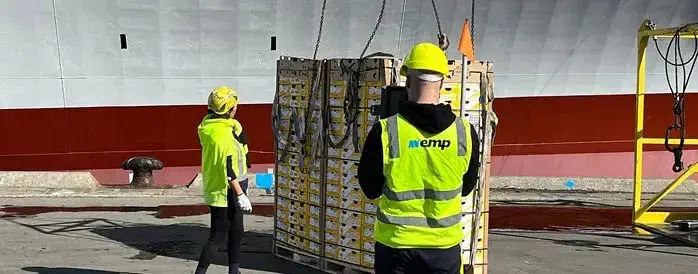
For controlling slung loads at the wharf, sensor testing showed that using stiff tag-line sticks, rather than reaching for the load by hand, reduced injury risk by 35%.
The Business Case
Modelled from the Melbourne Ports pilot. Actual results vary with each workforce and its risks.
5.5:1
Annual return on investment
$1.35M
Estimated total annual benefit
54 days
Payback period
$200,000
Annual reduction in claims costs
Why It Works
Four principles turned measurement into lasting change.
Leading indicators
Sensor risk scores show where injuries are likely before they show up in claims.
Targeted capacity
Profiling directs conditioning to the specific weakness behind the most common complaint.
Practical fixes
Coaching and simple equipment changes fit into the work rather than slowing it down.
Reportable outcomes
Measured results support Qube's safety, governance and ESG reporting.
Key Takeaways
- Wearable sensors turn high-risk port tasks into measurable, comparable scores.
- Workforce profiling reveals the physical deficits behind the most common symptoms.
- Low-cost equipment such as knee pads can cut task risk by more than half.
- Leading indicators give a clear business case well before claims data catches up.